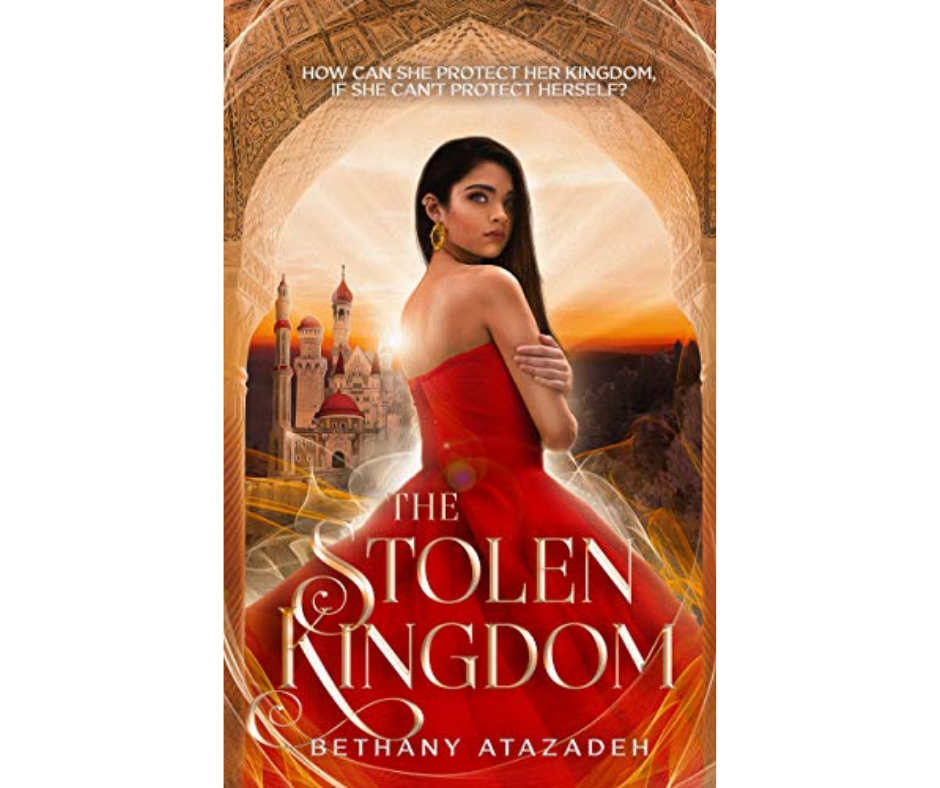
Book Review: The Stolen Kingdom: An Aladdin Retelling -Bethany Atazadeh

I’m still not one for fairy tale retellings mostly because I find they’re overdone and redundant. We know the end because they’re familiar tales, so it is rare that I find an author who is able to take a classic and turn it into an exciting read. Bethany Atazadeh’s The Stolen Kingdom does this well.

I picked it up as an author free giveaway and was pleasantly surprised. Not only was the story unique, but it was completely re-imagined. It is like the author was inspired by the childhood classic and made it her own.

Our main character, Arie, is not only being forced into a marriage against her will but has forbidden magic (because she’s a descendant from the Jinni through her mother’s side). So what does she do? She runs and finds herself with a crew of thieves (though none of them is named Aladdin). The tale ensues and while she helps them on a few endeavors, her identity is revealed and to save her father, she must betray the band of criminals and return home.

As always, I won’t give away any spoilers.

The story was delightful and filled with enough conflict and story twists that I had a hard time putting it down. It was a quick read and I may go on to read more in the series. I will say I was disappointed with the ending though as it felt ‘unfinished’. Granted, there are three more books, so I’m sure the author was leaving room for more story telling. Unfortunately, I found the ending didn’t make logical sense. It felt like the author was intentionally leaving the story unfinished because there is more in the series then an actual satisfying ending. So while the story was well told, entertaining and kept me hooked, the ending fell flat.

(Image retrieved from Amazon)

Renovations Coming

Hi Everyone! Thanks for being a part of the blog and for taking the time to read and like different blogs. I have been actively posting 3 blogs per week for the past few months and it’s been great! I’ve experimented with a number of different topics and areas of interest, and your engagement in the process has been helpful.

So I’ve decided to make some changes to what, how and how often I’ll be posting.

Book Reviews! These seem to be quite popular, so they will definitely continue. Though I will be more intentional about the posting of the reviews.

Podcasting/Vlogs: This is something I’ve been looking into and plan to add. Primarily, it’ll be the same kind of content as in my blogs but with a bit of a different edge to it since it adds voice and in some cases video.

Regularity of Posting: I haven’t completely decided on this, but I’m looking into 1 to 2 posts per week. The podcasting/vlogs will take time so this will influence (at least initially) the weekly posts.

There are a few other ideas filtering through my thoughts, but nothing is concrete yet since they’ll emerge with the renovating process. So stay engaged and let me know your thoughts!

Also, don’t forget to subscribe, like or share your comments.

Naming Characters: Nice to meet you!

One thing I find myself doing is keeping track of names I like. There are just some names that I hear, hold on to and wait for the right character to come along and claim it!

Some of my favourite names have found their characters as they are a part of manuscripts in progress. One series that I’m working on is set in an elven world separated into realms. There are two POV (Point Of View) characters named Zoe and Phoenix. I won’t give away any spoilers but Zoe’s name, which means life, was chosen specifically for her and is tied to her magical ability. Phoenix’s name was a name that just suited the character. It has nothing to do with the mythical bird.

Two fun names in the first book are Dasha and Coco. Both these names are inspired by friends. Dasha is the name of a friend’s daughter who helped inspire the character. The name, however, also means ‘possesses goodness’ which is an attribute of this minor character. Coco is the name of a friend. (Coco is actually her nickname that everyone, including her family, uses.)

And Zoe’s dragons: Chim, Pat and Tupac. The names match the abilities of the dragons. Chim comes from Chimalli which means ‘shield’. The creature is fiercely protective of Zoe and creates shields or cloaks to keep her safe when enemies are near. Patli means ‘medicine’ and supports the shortened form Pat. This dragon is known as a healer. She keeps Zoe and those around her healthy and whole. The third dragon’s name is Tupac which means ‘warrior’ and this dragon is as his name implies. He also has the ability to help Zoe fight and inspire her with battle strategies.

I hope you’re getting excited about this series. The first book is being editing, and will come out later this year! (Hopefully this spring.)

(Picture created with Canva)

Naming Characters: What’s in a name?

As I mentioned in the previous post, the name of a character is a big part of creating a character. I like to choose names that suit a particular aspect of the character.

In Hidden, all dragon and names given to the Arelian race were colours that matched their skin tones. This was actually stated in the book when Tully figured this out and confirmed it with Ciaran. The skin of Ciaran and his dragon, Shadow, was so dark, their meaning of their names reflected this. Ciaran means ‘little dark one’. Tully meant ‘peaceful’, which was a big part of her character arc. At the beginning of the story, she had a lot of anxiety, but through the story, she does become quite peaceful.

Here are some of the other main characters and their names:

  • Bain: lives near a river
  • Declan: goodness
  • Donella Eir: Donella = dark haired elfin girl; Eir = goddess of healing
  • Cedric: Chief
  • Owen: Young warrior

Breaking Enchantments was the first book I published, and I wrote it when I first returned from living in South Korea for seven years. It actually one second place in a publishing contest with Word Alive Press in 2014 before publishing it. The story itself was written as a way to help me process the good, the bad and ugly of life in Korea.

Erin, the main character, has a Korean mother and Canadian father. Her name was inspired by a Korean name ‘Ee-Rang‘ which was the family name ‘Ee‘ and the Korean word ‘Rang‘ meaning ‘and’. ‘Ee’ was Erin’s mother’s family name ‘Rang‘ Stevens. Meaning ‘mother and father’. Perhaps a bit strange, but the name suited Erin as she was battling with her Korean and Canadian identities.

Erin’s aunt’s name was Soo-Hye, which meant ‘pure wisdom’. This fully suited the character as she was a voice of reason in the novel. And Erin’s cousin, MiYoung, meant ‘Beautiful Spirit’. She helped Erin accept her identity and heal from her negative experiences.

While Breaking Enchantments is available on a variety of platforms as an ebook, it is also being offered as a free book to those who subscribe to my website (which also functions as my newsletter). So if you’d like a free read, you know what to do.

(Picture created with Canva)

Naming Characters: Who are you?

Naming a character might be a bit like naming a child. Except in this case, I already know the character intimately because as the author, they are someone I’ve spent a great deal of time creating and thinking about. I know their personality, their likes and dislikes, their strengths and weaknesses and how they’re going to grow. So when it comes time to name this inspired character, the name has to suit them. At least in my opinion.

One of the first steps I take when naming a character is compiling a list of names from various name generators and naming books. I look at meanings from a certain culture or language group so the names are consistent. I do this for most of my characters. Once the list is compiled, I try to choose the name(s) that best suits the kind of story I’m writing along with the world the characters find themselves a part of.

Sometimes characters don’t have a name when I first start writing, or their name gets changed. In this case, there are usually a few options and until the character is more ‘solid’ their name adjusts. But it’s a fun process and when the name settles on the character, it feels right. It’s a moment that becomes, ‘nice to meet you, __________.”

Over the next few days, I’m going to talk about some of the characters in my novels and how their names came about.

(Picture created with Canva)

The Writing Process: Outlining

Now that all our disjointed ideas are starting to take shape, it’s time to take one more step before typing that first riveting sentence of our first draft! Again for anyone writer who might say, I don’t plot! I fully hear you. I tried plotting when I wrote my first few manuscript attempts and spent so much time re-writing them that I gave up. Not to mention what a time waste it felt like. But I found a balance: A little organizing of my thoughts ensures less re-writes and a much more solid first draft. A little less structured plotting and organizing gives breathing room for the unexpected to take place in my story.

So here goes!

Now that I’ve spent a few days or a week jotting down ideas and trying to work them into my first draft of the novel, I turn to a spread sheet. On the spread sheet I take the structure I talked about in the last blog and create an outline. Believe me when I say the spread sheet has the bare minimum of notes.

Here are my columns left to right:

  • Scene / chapter
  • POV (Point Of View character)
  • Theme: briefly state how the scene/chapter supports the theme
  • Scene/chapter plot points/beats
  • Summary: end of scene
  • Characters in scene: list of names (useful when I need this in a future scene and I can’t remember the name of a minor character or the spelling I used for a name)
  • Goal of scene: what the POV character wants and needs
  • Conflict: internal and external conflict the POV character faces

All of this is very briefly stated and I might only plan a few scenes / chapters at a time so I can update for the unexpected turns my plot takes that weren’t in the original plan. Note, filling in each column for each scene / chapter only takes about 10-15 minutes. It’s something I do after I’ve finished the day’s writing, so when I sit down to write again, I just need to glance at the notes and I’m ready to go, create and discover what new and unexpected turns the story will take me on!

The outcome is I have a lot less messy first drafts that I trash because I’m so confused by the plot and seriously doubt it’s fixable. A second outcome is that I get a lot more writing done with less time or effort. I hope to publish my third book soon! Third, my manuscripts are much more solid and need less re-writes (even my editor had noticed a profound improvement!)

I’d love to hear your approach to writing, so take some time to share your process. Happy Writing!

(Picture created with Canva)

The Writing Process: Structure

In my previous blog, I talked about what brainstorming looks like for me so today’s focus is going to look at what I do with all those notes and scrambled ideas.

Once I’ve spent a sufficient amount of time working with an idea, looking at possibilities, filling in gaps, asking questions, etc… I take the next step. You might ask, ‘how do you know’? That’s an excellent question and I don’t have an answer for you other than, ‘I just know it’. It’s an instinctual feeling, but I can offer some indicators. First, the ideas excite me and feel plentiful. Second, I can visualize the story. Third, I start to feel connected to the characters and the story. But mostly, it just boils down to, ‘I know it’s ready’.

Now is the tricky part as my outlining is a mixture of steps taken from a variety of sources, re-worked and called my own, but where I can I will give credit to the source.

So I do a few things but not necessarily in this word. Rather, I have a word document that I begin filling up.

First though, I want to know the following:

I find that there’s no set organization that works. Each manuscript takes a different approach. Sometimes I have to figure out the mirror moment before I know the character arc, theme and narrative question. Sometimes I need to know the theme and then narrative arc before I know the rest. Mostly I just go as I feel the character(s), story inspiring. If I see a clear picture of the mirror moment, then I go with it. If, from brainstorming, I see the conflict and struggles of the characters very clearly, then I know the narrative question and theme. However, I do strongly encourage you to take time to think about these aspects of your character, plot and world development before structuring the story or starting your writing. (Trust me, it saves time later.)

Once I’ve figured out the above, I take that and my brainstorm and then fill in the journey. I do this for all my POVs and then put them together into one final structure. Now, there are many excellent methods out there for creating a story structure. I’ve found James Scott Bell’s super structure method works best for me.

I won’t go into detail about the super structure method as there are a number of story structure methods out there, so I encourage you to find what works for you. However, a story needs a good structure, so even if you’re a panster, or discovery writer (and there are famous authors who write like this), do this step loosely. Note, with all my talk on structure and organization, it might surprise you that my structures aren’t as detailed as you’re probably thinking. There might only be one or two lines that will help me remember the details as I sit down to write, which leaves lots of room to discover the story as it unfolds. So why do I take the time to do all this ‘loose plotting’? Because I value efficiency and nothing stifles my writing then endless re-writes.

(Picture created with Canva)

The Writing Process: Brainstorming

One question I am often asked about when people find out I’m a writer is: How do you come up with all those ideas? It’s a fair question and this week’s blogs are dedicated to looking at bit at The Writing Process. I’d like to clarify at the start that these are only strategies that work for me and perhaps the one thing I can say that works the best is reading books about writing and trying something new. This keeps my writing fresh and helps me grow as a writing.

Brainstorming! First, there’s an idea. How I come up with an idea is varied. There are certainly good methods and the most common I’ve heard is to set aside time to write about ideas. For example: take five minutes and write down as many settings as you can think of. Then do the same for characters or plot, etc. You get the idea and you may have tried this yourself. This is certainly a great idea, and I have gotten good ideas out of it, but sadly nothing that has ever worked into a book or story.

Okay, so that was a writing tip. But back to what how story ideas work for me. Usually they come to me. I do have a very active imagination, so turning it off tends to be a problem.

Second, once inspiration hits, I sit down at my computer with a completely blank Word document and begin typing out ideas. I ask questions to try to figure out the back story and what type of journey I see taking place for this character. I do this over a few days/weeks until the idea starts to form.

Third, once those ideas start to come together into a very loose plot, I begin to put them in order and keep adding ideas of possible scenes. Nothing is in any specific order and it certainly isn’t how the story will eventually unfold. No, right now it’s a jumble of ideas building off each other in point form. It’s details about characters and building of backstory.

Fourth, something else that usually happens at this stage is research. With the brainstorming comes a need for further discovery. Perhaps I want to use unicorns in this fantasy book, so I search for what’s written and known about unicorns and then add my own spin. Therefore, in the midst of my brainstorming is notes are further notes. These build off of each other as the ideas continue to percolate.

(Picture created with Canva)

Book Review: Unstoppable Liv Beaufont by Sarah Noffke and Michael Anderle

Strong female leads are something more and more readers are looking for in a good book, and I think there is a fine line between an admirable female lead and one… you want to like but struggle with. In some books, the seems to be going for strong but the female is so unlikable that I cringe inwardly and seldom finish the book.

The Unstoppable Liv Beaufont, however, does not fit this category. She’s likable and a bit snarky but she’s not horrifically mean. She’s an interesting character who’s pulled into a magical world she ran from only to fight battles she wants nothing to do with all the while trying to solve the mystery surrounding the deaths of her parents and siblings. It’s urban fantasy and the story is filled with all the varieties of fantasy creatures living secretly among the humans. From lovesick fae to hippy elves, from dragon eggs to giants raising kittens and werewolf grandmothers to brownies! Not only has Liv pulled me into the series, but the cast of characters adds to the sense of believability the authors have woven into the narrative.

This series is presently on sale for 0.99cents on Amazon. There’s 12 books in the series. Yes, 12! So I haven’t finished the book, but I have finished six of them and have full intentions of finishing the series, but I do need breaks in between books.

(Picture created with Canva; Book cover retrieved from Amazon)

Book Review: The Spoken Mage by Melanie Cellier

We all have our styles and tastes when it comes to books and genres. As you’ve probably guessed by now, I prefer fantasy, urban fantasy and a touch of clean romance. I used to be a lot more diverse in my reading, but time is precious (not in the Gollum-Lord of the Rings kind of way).

I’ve recently been reading this series: The Spoken Mage by Melanie Celllier and am on my third book. So far it is an enjoyable read meant for the YA fantasy crowd. The story keeps my attention with good conflict and tension. I want to know what will happen! The magic is interesting, creative and well explained.

The story line touches a bit on the Harry Potter idea of a poor girl who shouldn’t have magic but at the age when magic is meant to emerge, it does for her. She ends up in a special school for people with magic or mages as the book calls them. Initially no one likes her and she doesn’t seem to like anyone. While her reasons are sound, I do find her going a bit overboard and treating some people (a certain prince) harsher than she should when he really hasn’t done her any harm.

The love story developing is expected and she certainly becomes much more loveable as a character. There is a bit too much telling where showing or dialogue could have worked much better. But the stories are well put together and entertaining. And presently on sale for 0.99cents! so if this sounds like a read you might enjoy, hurry and get yours today on Amazon!

(Picture created with Canva; Book cover retrieved from Amazon)